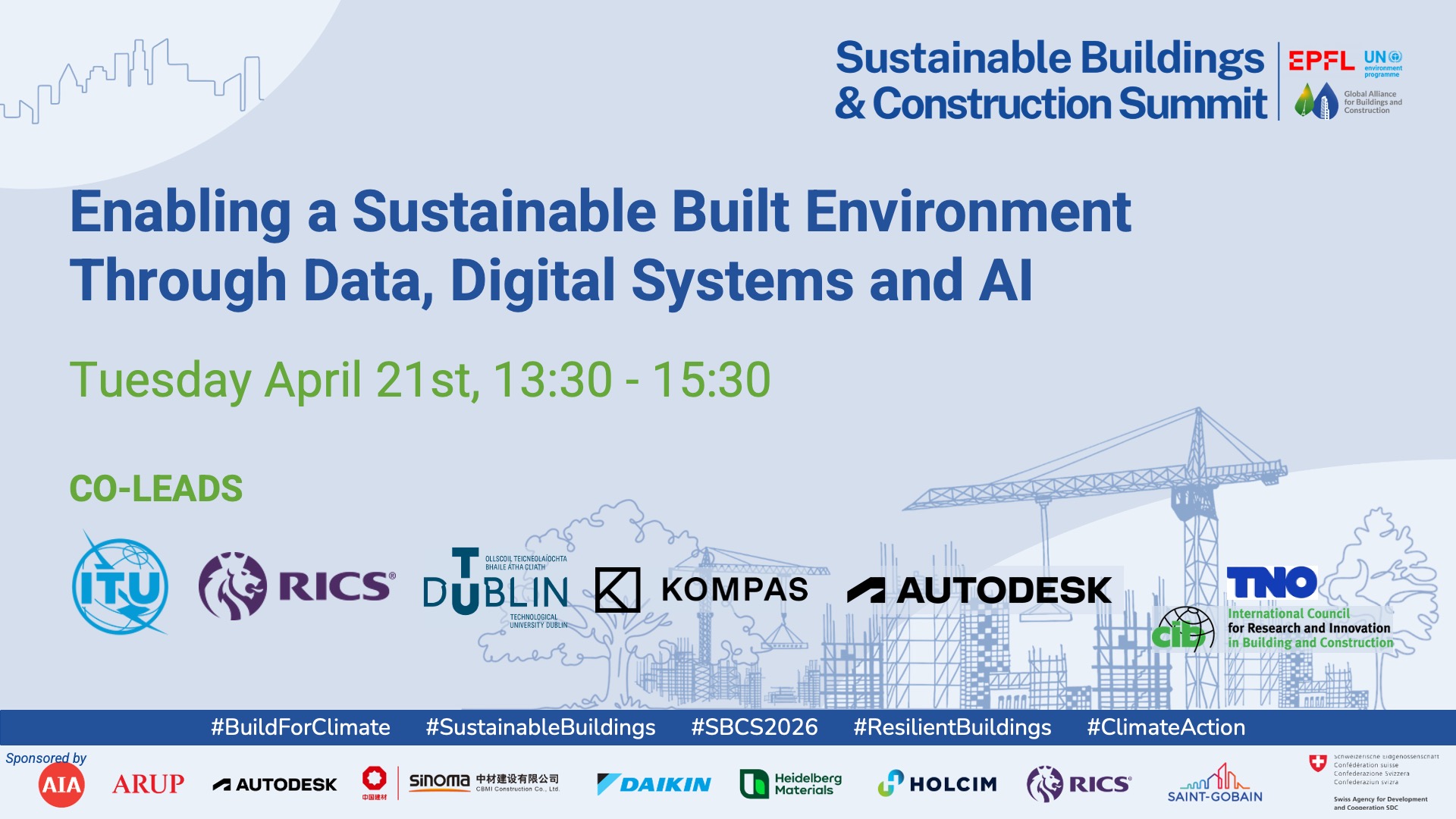
Co-leads
ITU, RICS, TU Dublin, Kompass, Autodesk, TNO-CIB
Support: ACE – CAE, Build Change, Siemens, DESNZ/UK, U4SS, U4SSC, U4SSC, Solar Impulse Foundation
Workshop Description
This workshop examines how data, digital systems and artificial intelligence can be applied in practical and responsible ways to advance sustainability outcomes across the built environment. It highlights real applications in design, procurement and construction delivery, focusing on how digital workflows, analytics, optimisation tools and AI‑enabled processes can improve performance, reduce emissions and support better, climate‑responsive decision making. The session also explores the data standards, interoperability needs and governance considerations required to ensure that digital and AI solutions are trusted, transparent and appropriately scaled. Particular attention is given to the diverse realities of global markets, including regions where digital infrastructure, skills and data systems are still developing. Participants will work together to identify the most promising opportunities, challenges and enablers that can help industry, government and solution providers apply data‑driven and AI‑supported approaches that deliver meaningful sustainability impact in practice.
Guiding Questions:How can data, digital solutions and AI be responsibly and effectively applied to accelerate sustainability outcomes in the built environment while ensuring they do not widen global inequalities? What best practices in analytics, data quality, interoperability and digital systems, including AI-enabled approaches, can help accelerate sustainability across diverse market contexts?
Expected Outputs
The workshop output may include short summaries, priority mappings, gap analyses, or initial frameworks. Possible outputs may include:
- Baseline map of current digital and AI practices focusing on climate action
- Priority sustainability use cases for digital and AI tools
- Foundational data and governance requirements
- Draft set of principles or minimum requirements for responsible digital and AI adoption in the built environment
- Interoperability and capacity‑building needs
- Initial actions to shape a draft implementation roadmap
Presentations and breakout topics:
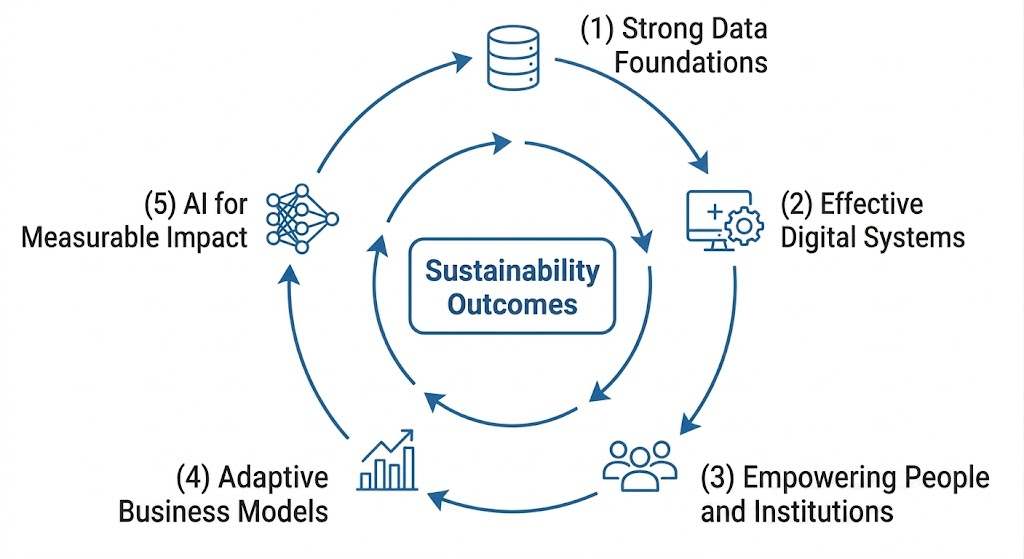
- Strong Data Foundations – Fixing the Data Problem
- Effective Digital Systems – Digital Tools That Actually Work
- Capacity & Policy – Real-world Digital & AI Adoption
- Adaptive Business Models – AI‑driven digitalization and industrialization reshape construction processes and business models
- AI for Measurable Impact – AI Use Cases That Deliver Impact